
The Cambridge Lecture Problem: Why Rahul Gandhi’s Message Stalls
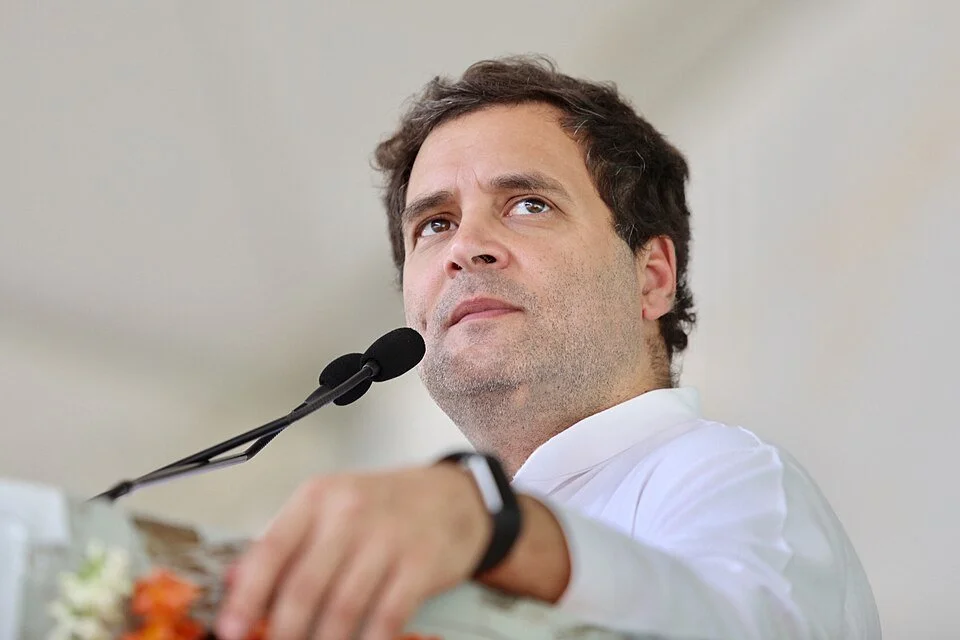
This is not an endorsement, ideological critique, or political commentary. It is an objective evaluation of messaging architecture, linguistic resonance, and audience retention for a mass political leader.
Mass political communication follows one iron law: if the audience has to do homework to understand your point, you have already lost them.
Rahul Gandhi does not suffer from an intent problem. He suffers from a packaging problem. He diagnoses systemic economic and sociological friction with genuine intellectual nuance, but delivers those insights using the vocabulary of a graduate seminar room.
Here is an audit of why his signal continually breaks down in mass formats—and the concrete messaging shifts required to fix it.
1. The "Seminar Room" Trap: Academic Abstraction vs. Kitchen-Table Math
Gandhi frequently relies on macroeconomic and sociological frameworks:
- "Institutional capture" (संस्थागत नियंत्रण)
- "Oligopolistic concentration" (बाज़ार पर एकाधिकार)
- "Democratic backsliding" (लोकतांत्रिक ह्रास)
While conceptually sound, electorates rarely evaluate leadership through macro-theories. They evaluate leadership through immediate personal stakes. When a voter earning ₹18,000 a month hears abstract economic jargon, their brain registers white noise.
"Two or three conglomerates control the entire financial and market apparatus of this country."
"सरसों का तेल ₹130 का क्यों है? क्योंकि दो बड़ी कंपनियों ने तय कर लिया है कि आपकी रसोई से कितना निचोड़ना है। यह आपके ₹50 की लूट का हिसाब है।"
A mass communicator must do the translation work for the audience. Never hand the voter an academic syllabus.
2. The Language Glitch: From Shuddh/English Stasis to Aam Bolchal
In high-stakes press conferences, a recurring cognitive pattern emerges. Gandhi thinks, conceptualizes, and structures policy logic primarily in English.
When pressed on complex topics in Hindi, a micro-delay occurs: pace drops, vernacular precision fades, and he often pivots: "Let me explain this in English so it's exact..."
The Real Vocabulary Fix: Renu and Parsai over White Papers
The solution isn't to retreat into archaic, formal Sanskritized Hindi (Klisht Hindi). That creates a different kind of alienation.
What mass political communication requires is aam bolchal ki bhasha—the rhythmic, street-smart vernacular found in the Hindi literary greats. Think of Phanishwar Nath 'Renu' for raw grassroots cadence, or Harishankar Parsai for devastating, dry socio-economic satire. Their writing reflects the tea-stall and the local chowk, not the civil service exam paper.
- Kill the Social Distance: Switching to English mid-briefing instantly re-establishes an elite barrier between the podium and the crowd.
- Embrace Folk Metaphor: Complex economic critiques are won with idioms (मुहावरे), short rhythmic barbs, and parables, not PowerPoint bullet points.
- Eliminate Soundbite Vulnerability: Real-time translation lag produces disjointed cadence, giving opposing digital teams ready-made clips to mock.
3. The Balance Sheet: 80% Grievance, 20% Aspiration
Gandhi excels at cataloging what is broken: inflation, joblessness, institutional pressure. However, persistent anger only mobilizes the core converted base. It rarely converts the pragmatic swing voter.
| Attribute | Grievance Mode (Current) | Aspirational Mode (Required) |
|---|---|---|
| Core Theme | "Look at what is being taken from you." (आपके साथ अन्याय हो रहा है) |
"Here is what your family's bank balance looks like in 3 years." (अगले 3 साल में आपकी जेब और रोज़गार का नक्शा) |
| Emotional Tone | Alarm, victimhood, systemic decay. | Agency, upward mobility, concrete solutions. |
| Audience Capture | Partisan core base. | The aspirational, uncommitted middle class. |
Voters look for an architect with a blueprint, not merely a co-complainer filing bug reports on the existing system.
4. The Tennis Ball Problem: Lack of Ruthless Focus
If you toss someone one tennis ball, they catch it. If you throw five at once, they drop all five.
In a single 25-minute media briefing, Gandhi often touches upon:
- The Caste Census (जाति जनगणना)
- Border infrastructure and defense strategy
- MSME liquidity and GST friction
- Media ownership and editorial independence
- Constitutional safeguards
In a hyper-saturated media cycle, trying to win every debate simultaneously means winning none. Message discipline requires picking one battleground theme per week and ruthlessly pivoting every question back to that single premise.
The Takeaway
Rahul Gandhi possesses rare strengths in modern politics: physical stamina, accessibility, and comfort with unscripted Q&A. But oratory is not measured by earnestness; it is measured by cultural recall. Until he drops the seminar-room abstraction, masters the street-level vernacular of bolchal, and balances critique with a tangible aspirational blueprint, the message will remain trapped in the room where it was spoken.